Understanding the Ink

by KitainkPH

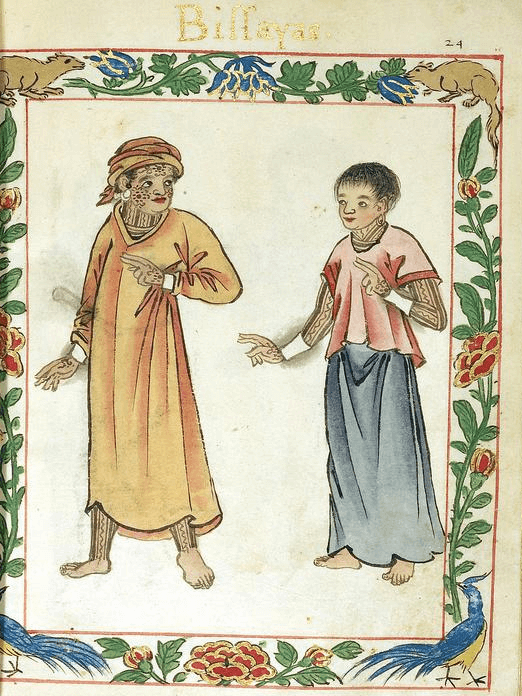
© Boxer Codex (c. 1590)

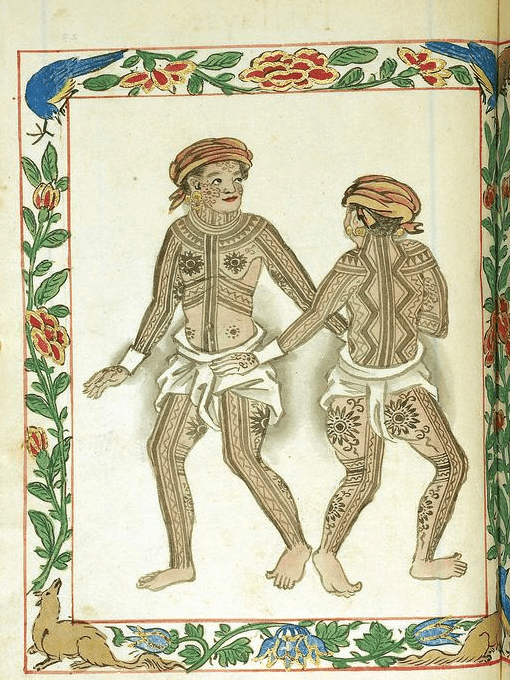
Long before the Spaniards arrived and renamed our islands in honor of Prince Philip of Spain, early colonizers referred to the Philippines as “Las Islas de los Pintados”The Islands of the Painted People. This name came from the striking appearance of our ancestors, whose bodies were adorned with tattoos.

The Island of the Painted People

Our ancestors had many terms for tattoos, including batok, whatok, batuk, patik, batek, batak, and tatak. In Tagalog, tatak means “to mark” or “engrave,” and it comes from taktak, meaning “to hit repeatedly.” This refers to the traditional hand-tapped method of tattooing. A wooden stick with one or more needles was dipped in ink made from soot and then tapped into the skin using another stick. This technique is similar to the Polynesian tatau, from which the modern English word “tattoo” originates.

© Boxer Codex (c. 1590)

Tattoos were once a kind of language, visible symbols that people could “read.” They signified a person’s role in the community, social status, and spiritual beliefs. Some designs reflected relationships with nature or ancestors, while others represented courage, personal values, or even health and healing. Tattoos were also used as memory aids for oral histories, helping communities remember important stories and teachings.

Aguila, L. J., Lizardo, R. L., Portes, A. J., Romero, S. T., & Valderrama, G. A. (2024). Feminine Ink: Exploring Women’s Tattoos in the Workplace as Expressions of Body Autonomy and Challenges to Traditional Femininity and Sociocultural Perceptions in the Philippines (pp. 1–468).

© KITAINKPH, 2025
Developed by: Lizardo

CONTACT US

De La Salle-College of Saint Benilde, Design and Arts Campus (D+A Campus)

kitaink.ph@gmail.com

© KITAINKPH, 2025
Developed by: Lizardo

© KITAINKPH, 2025
Developed by: Lizardo