

By KitainkPH | October 27, 2025
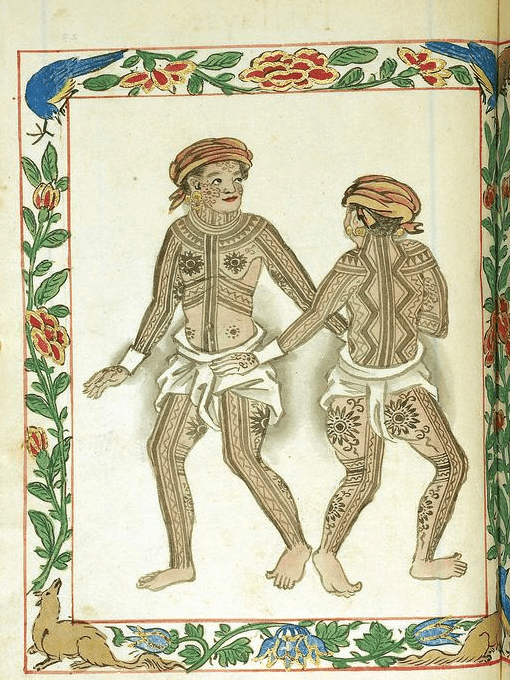
© Boxer Codex (c. 1590)
Long before the Spaniards arrived and renamed our islands in honor of Prince Philip of Spain, early colonizers referred to the Philippines as “Las Islas de los Pintados” — The Islands of the Painted People. This name came from the striking appearance of our ancestors, whose bodies were adorned with tattoos.
Our ancestors had many terms for tattoos, including batok, whatok, batuk, patik, batek, batak, and tatak. In Tagalog, tatak means “to mark” or “engrave,” and it comes from taktak, meaning “to hit repeatedly.” This refers to the traditional hand-tapped method of tattooing. A wooden stick with one or more needles was dipped in ink made from soot and then tapped into the skin using another stick. This technique is similar to the Polynesian tatau, from which the modern English word “tattoo” originates.
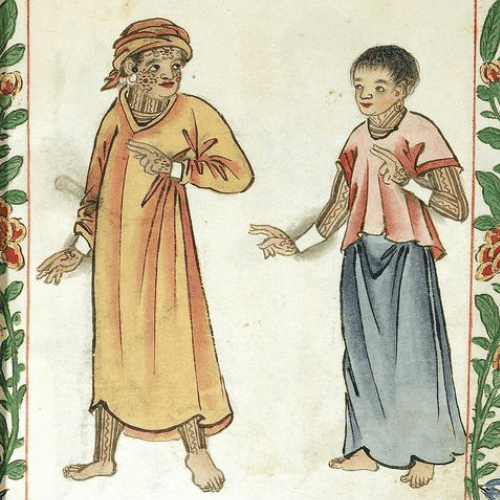
© Boxer Codex (c. 1590)
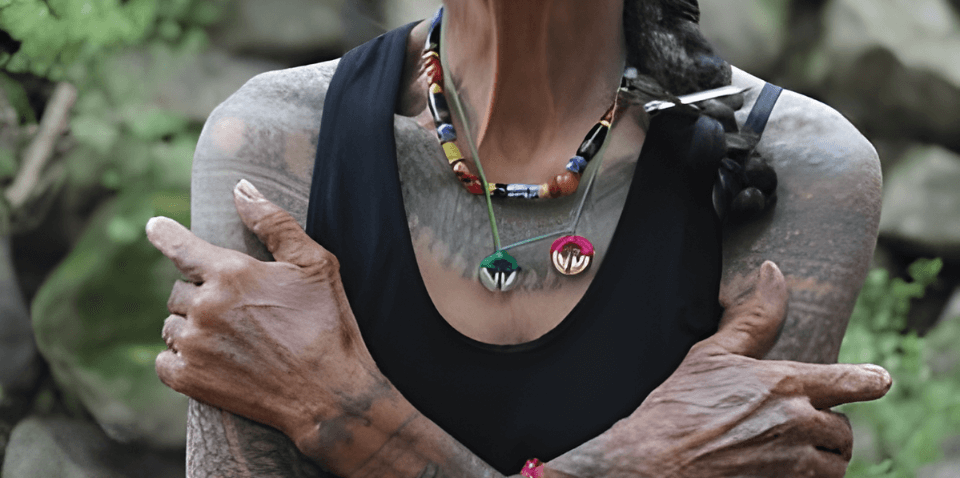
Tattoos were once a kind of language, visible symbols that people could “read.” They signified a person’s role in the community, social status, and spiritual beliefs. Some designs reflected relationships with nature or ancestors, while others represented courage, personal values, or even health and healing. Tattoos were also used as memory aids for oral histories, helping communities remember important stories and teachings.
Historically, tattoos were not only for men. Among many indigenous groups, women also bore tattoos that represented coming of age, social status, spiritual beliefs, or rites of passage. These were marks of pride. However, with colonial influence came a shift in perception. What was once a respected cultural practice became something frowned upon or hidden—especially for women.
This stigma persists today. In conservative or professional environments, tattooed women are still often expected to cover their ink to be considered “respectable” or “professional.” But by being visible and successful in these spaces, many women are changing the narrative. Their tattoos are no longer seen as rebellious—they are seen as symbols of strength, survival, and self-definition.
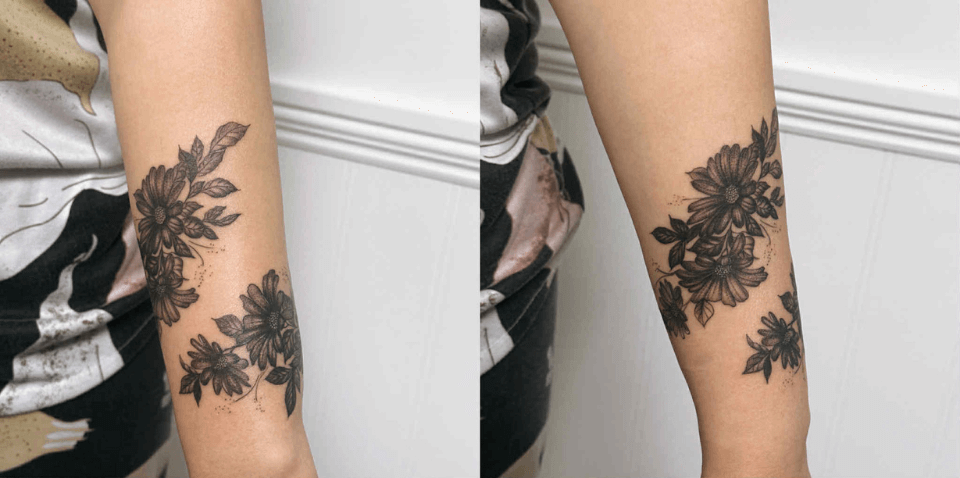
Today, more Filipina women are using tattoos to tell their stories, reclaim their bodies, and challenge the idea that femininity must always be soft, quiet, or traditional. Each design, each mark, becomes a declaration: This is mine.
Reference:
Aguila, L. J., Lizardo, R. L., Portes, A. J., Romero, S. T., & Valderrama, G. A. (2024). Feminine Ink: Exploring Women’s Tattoos in the Workplace as Expressions of Body Autonomy and Challenges to Traditional Femininity and Sociocultural Perceptions in the Philippines (pp. 1–468).
READ MORE

Tattoos are more than ink on skin, they are...
The meaning behind a tattoo varies from...

CONTACT US
De La Salle-College of Saint Benilde, Design and Arts Campus (D+A Campus)
kitaink.ph@gmail.com
CONTACT US
De La Salle-College of Saint Benilde, Design and Arts Campus (D+A Campus)
kitaink.ph@gmail.com